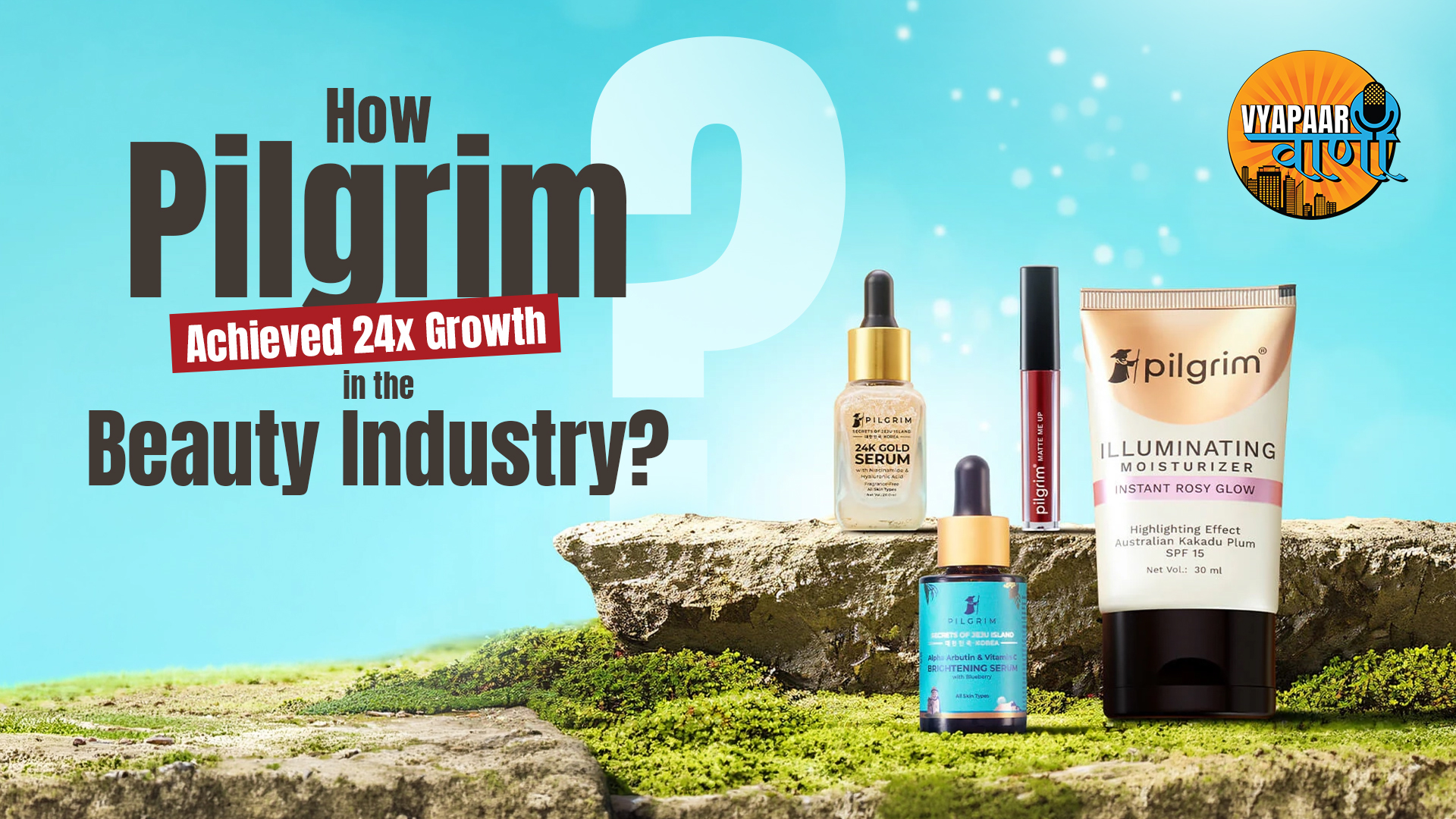
How Pilgrim
Archived 24x Growth In the Beauty Industry?
This Week's Highlights
5 Top Manufacturing Startups To Watch

How Flo Mobility Is Bringing AI-Powered Robots to India's Construction Sites
Bad Skin Day Billion Dollar Idea: The Yes Madam Story

How Frostreats Turned A Simple Idea Into ₹14 Crore Business

Secures ₹290 Crore Series B To Scale Rural Retail Network
How Pilgrim Achieved 24x Growth In The Beauty Industry?
India’s beauty and personal care (BPC) market is brutal.
Legacy FMCG giants dominate mass shelves.
Global brands own aspiration.
And the once-celebrated D2C beauty wave is now slowing down.
Brands like Sugar, WOW, and Juicy Chemistry are discovering a hard truth: digital-first scale doesn’t guarantee durable growth.
Yet, one brand is quietly defying the trend.
Pilgrim, founded in 2019 by Anurag Kedia and Gagandeep Makker, grew its revenue 24× in just three years — from ₹17 Cr to ₹400 Cr in FY25 — and is targeting ₹600 Cr by FY26.
At a time when the D2C beauty thesis is under pressure, Pilgrim’s story is less about hype and more about execution, patience, and offline discipline.
A Founder Who Failed Before He Scaled
Kedia didn’t enter beauty as a first-time founder.
Back in 2006, he co-founded a chain of spas that later became beauty salons.
The business grew — and then collapsed. He exited in distress in 2018.
That failure left him with two lasting insights:


Service businesses don’t scale cleanly in India
Beauty is a long-term category — if you build it right
Instead Of Walking Away, Kedia Went Deeper.
Spotting the Millennial White Space
In 2018, Pilgrim’s founders noticed something subtle but powerful. India’s millennials weren’t just buying beauty — they were filtering it through three lenses:
- Good For Me → Clean Ingredients, Transparency
- Good For Society → Cruelty-Free, Ethical Brands
- Good For The Planet → Sustainability
At the same time, Korean and global skincare trends were exploding — but imported products were expensive and unfamiliar. Pilgrim’s bet was simple:
Global formulations, Indian pricing, local manufacturing Launched in a Pandemic, Built in Silence
Pilgrim launched in March 2020 — the worst possible timing. Inventory sat unsold. Lockdowns froze logistics. Shutdown looked inevitable.


Instead of panicking, the founders built quietly:
- Educated Users On Skincare
- Created Content-Led Trust
- Engaged Directly With Early Consumers
When restrictions eased, sales followed:
- Offline Expansion Increased
- Brand Awareness Grew
- Revenue Scaled Rapidly
Why Offline Changed Everything
- Here’s where Pilgrim truly diverged from most D2C brands.
- In 2023, Pilgrim made a deliberate push into offline retail — even though it was expensive, slow, and painful.
- Retailers were skeptical.
- Feedback cycles were slower.
- Sales teams and kiosks burned cash.
- But Kedia understood something many D2C founders didn’t:
You don’t build a ₹1,000 Cr consumer brand from Instagram alone.
Offline forced Pilgrim to:
- Earn shelf trust
- Improve product-market fit
- Build recall beyond ads
- Feedback cycles were slower.
Today:
- ~20% revenue comes from offline
- Online remains the profit engine
- Tier 2–3 cities contribute meaningfully via social discovery
The Real Growth Engine: Listening, Not Discounting
Pilgrim didn’t scale on heavy discounts.
Instead, It Scaled On Feedback Loops:
- Customer Calls
- Surveys
- Video Interactions
- In-Person Conversations
Those Insights Fed Directly Into:
- R&D Decisions
- Pricing
- Marketing Narratives
The payoff?
~40% of Pilgrim’s website customers purchase at least 3 times in 12 months
That’s rare in beauty.
What Pilgrim Is Building Next
With ~₹200 Cr in capital, Pilgrim is expanding carefully:
- Pilgrim Professional → B2B salon line
- PHD (Proven Honest Derma) → dermatologist-led brand
- Adjacent Categories, Not Reckless SKU Sprawl
For Kedia, it’s a full-circle moment — re-entering salons, but this time with a scalable, product-first model.
Vyapaarवाणी Takeaway
Pilgrim’s journey offers a clear lesson for founders:
- D2C is not the business - Distribution is
- Offline isn’t optional - It’s inevitable
- Brands don’t win by shouting - They win by listening
In A Market Crowded With Lookalikes, Pilgrim Didn’t Chase Virality.
It chased Trust, Shelves, And Repeat Customers.
And That’s How You Build A Beauty Brand That Lasts.
For More Breakdowns On How Indian Startups Scale Beyond Hype, Stay With Vyapaarवाणी
Connect With Us
For Any Inquiries Or Assistance, Please Feel Free To Reach Out. Our Team Is Here To Support You And Will Respond At The Earliest Convenience